Teens who fled Venezuela after deadly quakes caught in another disaster in Colombia
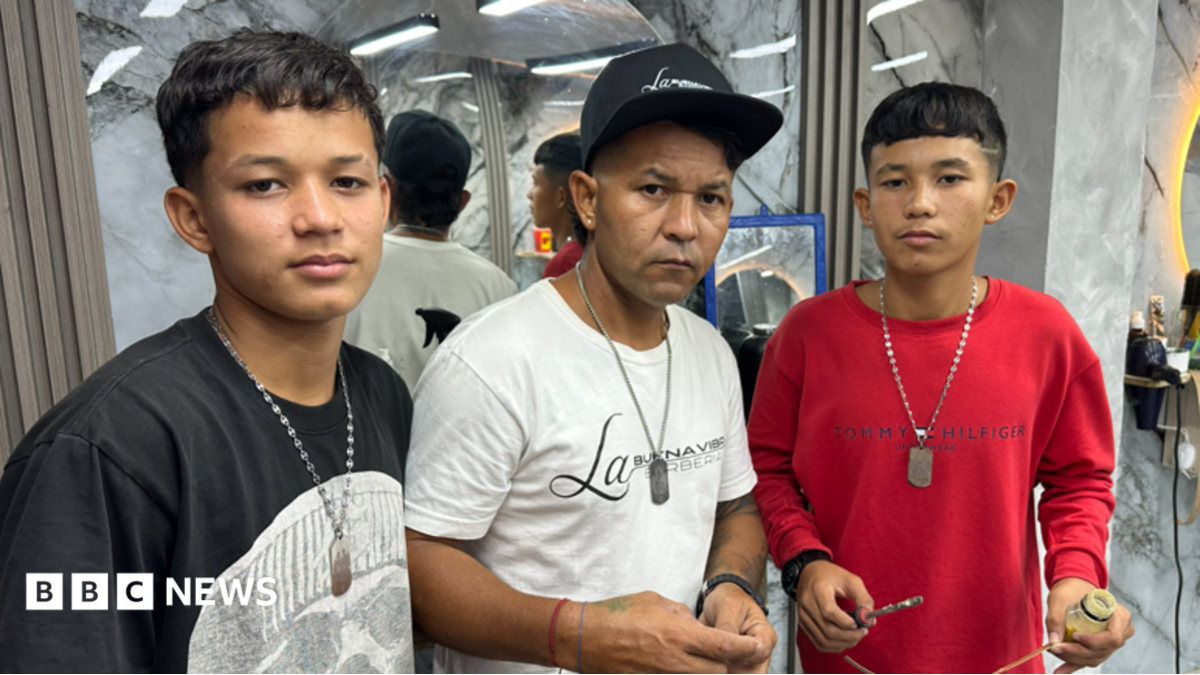
Deivi (left) with Winder and their father Deivid "The earthquake is haunting me," Deivi DelfÃn says. The 15-year-old feels like he and his brother, Winder, have been chased by tremors these past few months, having lived through two that struck with devastating effect in Venezuela, only to get caught up in another this week after moving to Colombia. He tells the BBC that he and his brother, 17, no longer felt like children, having witnessed corpses damaged beyond recognition. After their home in La Guaira - the area of Venezuela hardest hit by the twin quakes on 24 June - was reduced to a pile of rubble, killing three family members including their mother, they moved to Cali, Colombia, where their father works, on Friday. Three days later, they felt the ground shake again. Back at the end of June, the two teenagers had gone to the beach on Venezuela's Caribbean coastline. Winder wanted to take their 10-year-old brother Moissés, but he was grounded. "I kept insisting but my mum just wouldn't budge," he says. As they were heading home on the evening of the 24th, earthquakes of magnitude 7.2 and 7.5 struck just 39 seconds apart. The brothers hugged and shut their eyes. When they reopened them, everything was covered in dust and debris. When they arrived home, they saw the 12-storey apartment building had collapsed, trapping their mother Yusmani, grandmother Carmen and brother under a mountain of concrete. "My world came crashing down," Winder says. The earthquakes killed more than 6,300 people, according to the Venezuelan government. There is still no clear official figure for the number of people missing. Winder and Deivi joined rescue efforts, but for three days had nowhere to sleep and nothing to eat. Their father, Deivid, who was in Colombia at the time, was unable to find them for three days after returning to Venezuela. When he eventually found his sons, they began a search for their family members that would last nearly a month. One month after earthquakes, Venezuelans still search for loved ones and answers Earthquake is devastating blow to Venezuela at time of uncertainty Families search for earthquake survivors in one of Venezuela's hardest hit areas Deivid knew that climbing into the rubble would put his sons at risk, but they would not be deterred from searching for their missing family members. As they were still teenagers, they were better able to squeeze through narrow spaces, crawling between concrete slabs lit only by a handheld torch or mobile phone so they could tell rescuers where to dig. "By that point, I didn't feel like a child anymore," Deivi recalls . Gradually, they unearthed fragments of their family life - Moissés's shorts, Yusmani's Bible, and an unfinished shopping list - a sign they were getting closer to what had once been their home. The following day, Deivi spotted a piece of fabric in the rubble and recognised it as his grandmother's floral skirt. Soon after, firefighters confirmed they had found a woman's body. Deivi says he does not feel like a child anymore after weeks of searching for his missing family Winder was the first to recognise his mother's body. A plastic bag she had been using to dye her hair when they had left for the beach was still on her head. He got as close to her as he could and stayed with her for a few moments. They still could not immediately recover her body as it had been pinned down by a concrete slab. It was only while they were removing it that they found Moissés. The little boy was still holding onto his mother. At the sight of his son, Deivid collapsed. "When his little head fell into my hands... I broke down," he says. Winder was the first to see his mother in the rubble of their collapsed apartment After laying their family members to rest, the brothers went to live with their father in a modest, work-class neighbourhood of low-rise houses in the north-eastern outskirts of Cali, Colombia. They say they hope for a life filled with hard work and study, so their mother would be proud. But having only just settled into their new home, they felt a sensation on Monday that was all too familiar. Colombia had been hit by its strongest earthquake this century - a magnitude 7.4, which killed several hundred across the country, with many more still missing. Cali was, once again, among the hardest-hit areas. Moissés was found still holding his mother Yusmani's (left) hand Deivi, who was asleep when the tremor began, says that he thought he was dreaming when the movement was gentle. But when it intensified, he got out of bed and ran downstairs. His brother did the same. Outside, they grabbed hold of a metal gate and waited for the shaking to stop. Their father had been out on the street at the time. As soon as he felt the tremor, he thought of his sons and ran back to the house - but when he arrived, they were nowhere to be seen. A neighbour told him she had seen them leave and he kept searching through the streets until he found them outside the barbershop where he worked. His sons tried to reassure him, saying: "Dad, stay calm. We've been through this before." At least 169 killed in Colombia's largest earthquake in years Rescuers scramble for survivors with 180 dead in Colombia earthquake Watch: Family escapes home during Colombia earthquake Woman pulled alive from rubble 36 hours after Colombia quake Watch our pick of standout clips from across the BBC Parliamentary investigation resumes into Farage hours after he wins Clacton by-election Farage's by-election victory won't stop questions about finances Firefighters tackle blazes in West Midlands for second day as crews say 'progress being made' 'Survival has become the priority': Afghan women speak to BBC after five years of Taliban rule Wildlife suffering in heatwaves, say experts I got an £89 refund â how to cancel and avoid unwanted subscriptions Weekly quiz: What was used to smuggle Donald Trump off Air Force One? You got hold of eclipse glasses just in time - here's what to do with them now Couple tie the knot on 'magical' solar eclipse day The Papers: 'Houses burn and train derails on hottest day' and 'Britain on fire' Why heatwaves hit women harder Future Earth newsletter: Keep up with the latest climate news with Justin Rowlatt Philomena Cunk examines life and existence Listen back to Salonen orchestras playing 20th-century classics In 1940s Australia, a young orphan is brought to a remote orphanage How a murder case has been fuelling a culture war Engine parts smashed Ryanair window that man's head was sucked out of, report says 'Unprecedented' rains in Japan kill six people NHS service admits data breach due to pager use 'Houses burn and train derails on hottest day' and 'Britain on fire' Farage's by-election victory won't stop questions about finances I got an £89 refund â how to cancel and avoid unwanted subscriptions 'She was just Gaynor from up the road' - villagers ready for emotional Bonnie Tyler goodbye New Zealand break with OFC to withdraw Infantino support You got hold of eclipse glasses just in time - here's what to do with them now Son of 102-year-old says father died after being 'pushed off stage' Copyright © 2026 BBC. The BBC is not responsible for the content of external sites.Read about our approach to external linking.